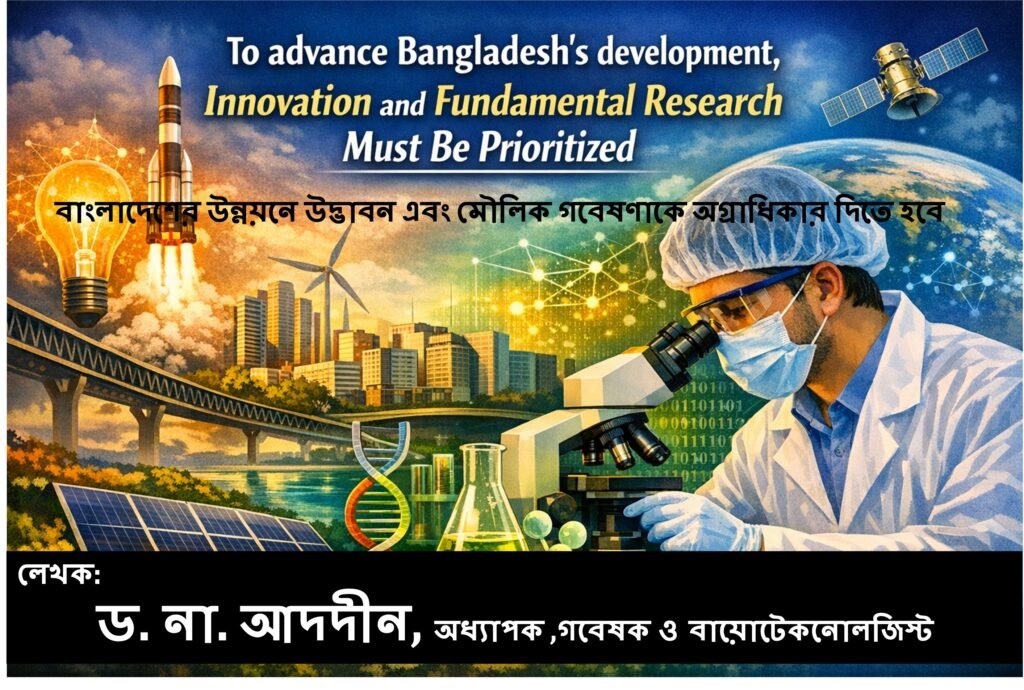

Biotechnology Paving the Way for Sustainable Development in Bangladesh


By Dr. Sarder N Uddin.
As Bangladesh continues its journey toward sustainable development, biotechnology is emerging as a powerful driver of progress. From improving crop yields to saving lives through healthcare innovations, biotechnologists are playing a vital role in helping the country achieve the United Nations Sustainable Development Goals (SDGs).
Transforming Agriculture and Ensuring Food Security
Agriculture remains the backbone of Bangladesh’s economy, and biotechnology has already begun transforming this sector. One of the most notable examples is the introduction of Bt brinjal (eggplant), a genetically modified crop resistant to pests.
Since its commercial release in 2013, Bt brinjal has significantly boosted farmers’ productivity and income. Studies show that farmers cultivating Bt brinjal achieved substantially higher yields and profits, while also reducing pesticide use and costs. 12 This innovation not only strengthens food production but also protects the environment from excessive chemical use.
Another breakthrough lies in salt-tolerant rice varieties such as BRRI dhan97 and BRRI dhan99, developed to withstand the saline conditions of coastal regions. These varieties can yield more than 6 tons per hectare, outperforming traditional crops and offering hope to farmers facing the harsh impacts of climate change. 3
Together, these advancements directly contribute to achieving Zero Hunger (SDG 2) and enhancing climate resilience.
—
Saving Lives Through Health Innovations
Bangladesh has earned global recognition for its achievements in public health, many of which are rooted in biotechnology. The Dhaka-based research institute icddr,b has been at the forefront of these breakthroughs.
Its most famous contribution, Oral Rehydration Solution (ORS), has saved millions of lives worldwide by treating dehydration caused by diarrheal diseases. 4 The institute has also pioneered zinc treatment for diarrhea and contributed to vaccine research for diseases such as cholera, HPV, and dengue. 4, 5
These innovations have dramatically reduced child mortality and improved health outcomes, advancing Good Health and Well-being (SDG 3).
—
Tackling Water Contamination Challenges
One of Bangladesh’s most pressing environmental issues is arsenic contamination in groundwater, affecting millions of people. Biotechnologists have introduced innovative solutions to address this crisis.
Among them is the SONO arsenic filter, invented by Bangladeshi scientist Dr. Abul Hussam, which provides an affordable and effective way to purify drinking water. 6 Additionally, bio-sand filtration systems can remove up to 98% of arsenic from water, offering a practical solution for rural communities. 7
These technologies demonstrate how biotechnology can ensure access to safe drinking water, contributing to Clean Water and Sanitation (SDG 6).
—
Driving Climate Action Through Renewable Energy
Biotechnology is also contributing to Bangladesh’s efforts to combat climate change. Rural biogas programs are a prime example of sustainable innovation.
These programs convert organic waste, such as cow dung, into clean fuel for cooking and electricity. Besides reducing reliance on fossil fuels, biogas systems produce nutrient-rich slurry that can be used as organic fertilizer, improving soil health. 8 Studies show that a large majority of users recognize significant environmental benefits from biogas adoption. 9
Such initiatives support both Climate Action (SDG 13) and Affordable and Clean Energy (SDG 7).
—
Building a Sustainable Future
Beyond agriculture and health, biotechnology is also strengthening Bangladesh’s industrial capacity. Ongoing efforts to develop vaccine manufacturing facilities aim to enhance the country’s ability to respond to future pandemics and meet domestic healthcare needs. 10
Experts believe that with increased investment in research, education, and public-private partnerships, Bangladesh can further harness biotechnology to address its development challenges.
—
Conclusion
From pest-resistant crops and life-saving health innovations to clean water technologies and renewable energy solutions, biotechnology is proving to be a cornerstone of Bangladesh’s sustainable development strategy. The work of biotechnologists not only addresses immediate national challenges but also positions the country as a model for other developing nations.
As Bangladesh moves closer to achieving the SDGs, continued support for biotechnology will be essential in building a resilient, healthy, and prosperous future for all.
References:
- ISAAA. Bangladeshi Farmers Gain Higher Yields and Profits from Bt Brinjal. 1
- Hossain, M. A. et al. (2025). Impact of Bt Brinjal on farmers’ income. 2
- CropLife Database. Commercialization of Bt Brinjal in Bangladesh. 3
- Rice Today (IRRI). Salt-tolerant rice varieties in Bangladesh. 4
- icddr,b. Major health achievements (ORS, zinc treatment). 5
- Healthcare Asia. Dengue vaccine research in Bangladesh. 6
- The Lancet. Oral cholera vaccine deployment. 7
- Hussam, A. SONO arsenic filter innovation. 8
- BioSand Filter Study. Arsenic removal in Bangladesh water. 9
- ARS Bangladesh. Rural biogas program and sustainability. 10
Author:
Sarder N Uddin, PhD
(Professor and Biotechnologist)